

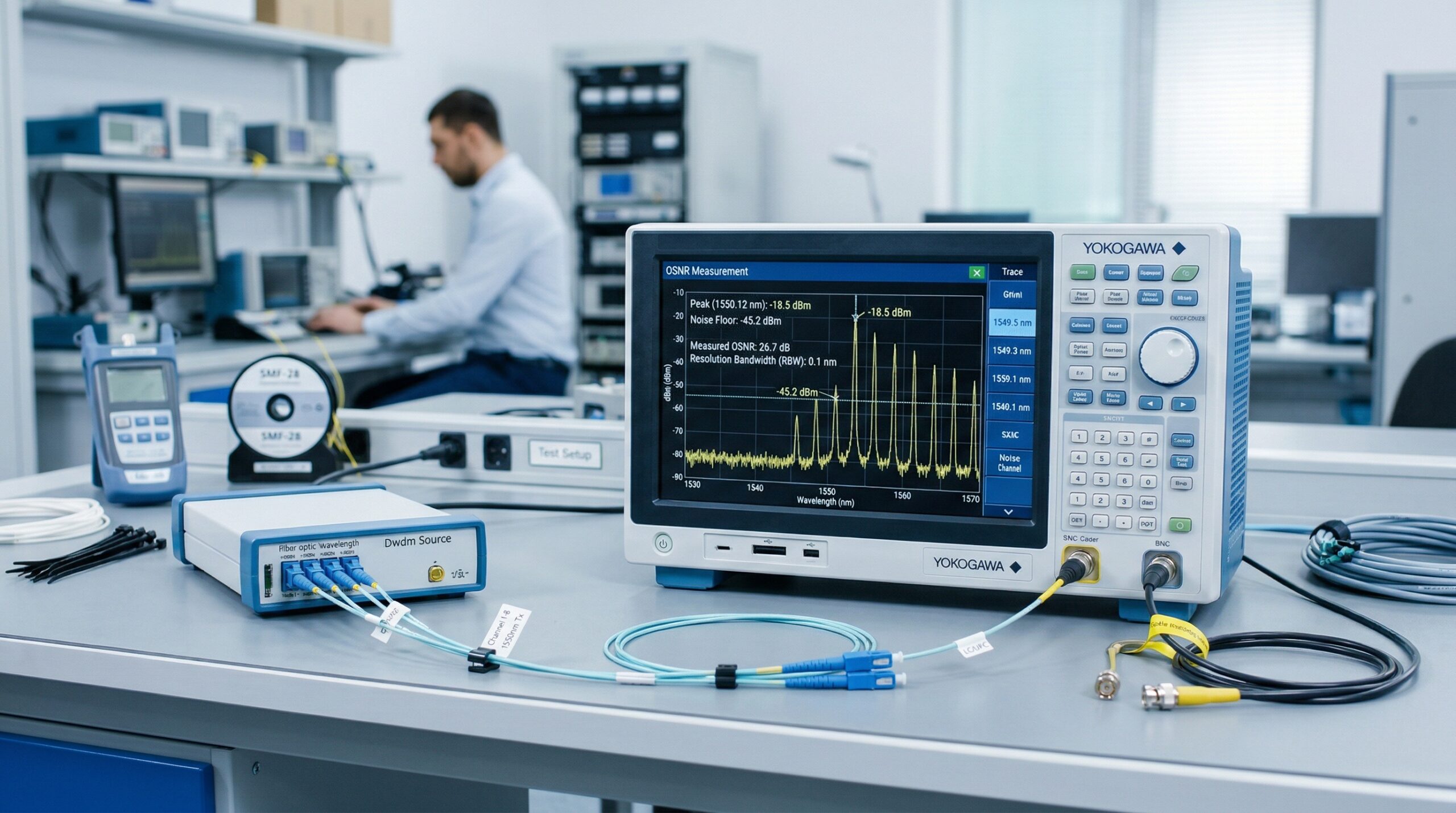
10 Nov Is AI in a Bubble? Exploring Real-World Impact in Optical Networking
The conversation around artificial intelligence continues to dominate headlines, with many asking whether the current surge in AI investment is sustainable or simply a temporary bubble. While some skepticism is understandable, focusing only on market speculation overlooks the undeniable real-world impact of AI across industries. From healthcare and transportation to manufacturing and business intelligence, AI is already delivering measurable value. One area where this transformation is especially significant—yet often underappreciated—is AI in optical networking, a field that underpins global connectivity.
Optical networks form the backbone of the internet, carrying massive volumes of data across continents through fiber optic infrastructure. These networks are inherently complex, relying on advanced components such as transponders, transceivers, optical amplifiers, and ROADMs, along with sophisticated modulation techniques. Managing and optimizing such systems requires continuous monitoring and deep technical expertise. This is where AI and machine learning are making a profound difference, enabling operators to analyze vast amounts of network data, predict issues, and automate processes that would otherwise be extremely difficult to manage manually.
One of the most impactful applications of AI in optical networking is real-time network monitoring. Traditional monitoring systems rely on threshold-based alarms that often trigger only after service degradation has already occurred. AI changes this approach by identifying subtle patterns in key performance indicators such as optical power, signal-to-noise ratio, and bit error rate. By detecting anomalies early, AI enables faster root cause analysis and can determine whether issues are related to fiber faults, connector contamination, or equipment degradation. This significantly reduces mean time to repair and improves overall network reliability.
Another major advancement is predictive maintenance in optical networks, which allows operators to prevent outages before they happen. By analyzing historical data from network components such as lasers, erbium-doped fiber amplifiers, and ROADMs, AI can identify patterns that indicate an impending failure. This enables proactive maintenance scheduling, reducing downtime, lowering operational costs, and improving service continuity. Predictive maintenance represents a clear example of how AI moves networks from reactive troubleshooting to proactive optimization.
AI is also transforming how optical networks handle traffic. With constantly changing data demands, static capacity allocation is no longer efficient. AI-driven systems can forecast traffic patterns, dynamically allocate bandwidth, and optimize routing paths to reduce latency and maximize throughput. This ensures better resource utilization and a consistently high quality of service for end users.
As optical networks evolve to support higher data rates such as 400G, 800G, and beyond, they become increasingly sensitive to impairments like chromatic dispersion, polarization mode dispersion, and nonlinear effects. AI-powered adaptive signal processing addresses these challenges by dynamically adjusting modulation formats and compensating for impairments in real time. This not only improves performance but also extends the reach and capacity of existing infrastructure without requiring costly upgrades.
Despite ongoing debates about whether AI is overhyped, its role in optical networking clearly demonstrates lasting value. From real-time monitoring and predictive maintenance to traffic optimization and advanced signal processing, AI is enhancing the performance, reliability, and efficiency of the networks that power our digital world. Optical networks may operate behind the scenes, but they are essential—and AI is ensuring they remain future-ready.
For professionals looking to stay ahead in this rapidly evolving field, optical network training is more important than ever. FiberGuide offers comprehensive training programs that cover both foundational concepts and advanced technologies in optical networking. These programs equip engineers, technicians, and IT professionals with the skills needed to implement AI-driven solutions and optimize modern networks.
Whether you are new to the field or looking to advance your expertise, FiberGuide’s certification programs—including CONA (Certified Optical Network Associate) and CONE (Certified Optical Network Engineer)—provide the knowledge required to understand fiber optic systems, apply predictive maintenance techniques, and enhance network performance in high-capacity environments. By investing in optical network training, you can position yourself at the forefront of innovation in AI and optical networking.
To learn about optical networking, explore our optical network training page.
Sorry, the comment form is closed at this time.